.jpg)
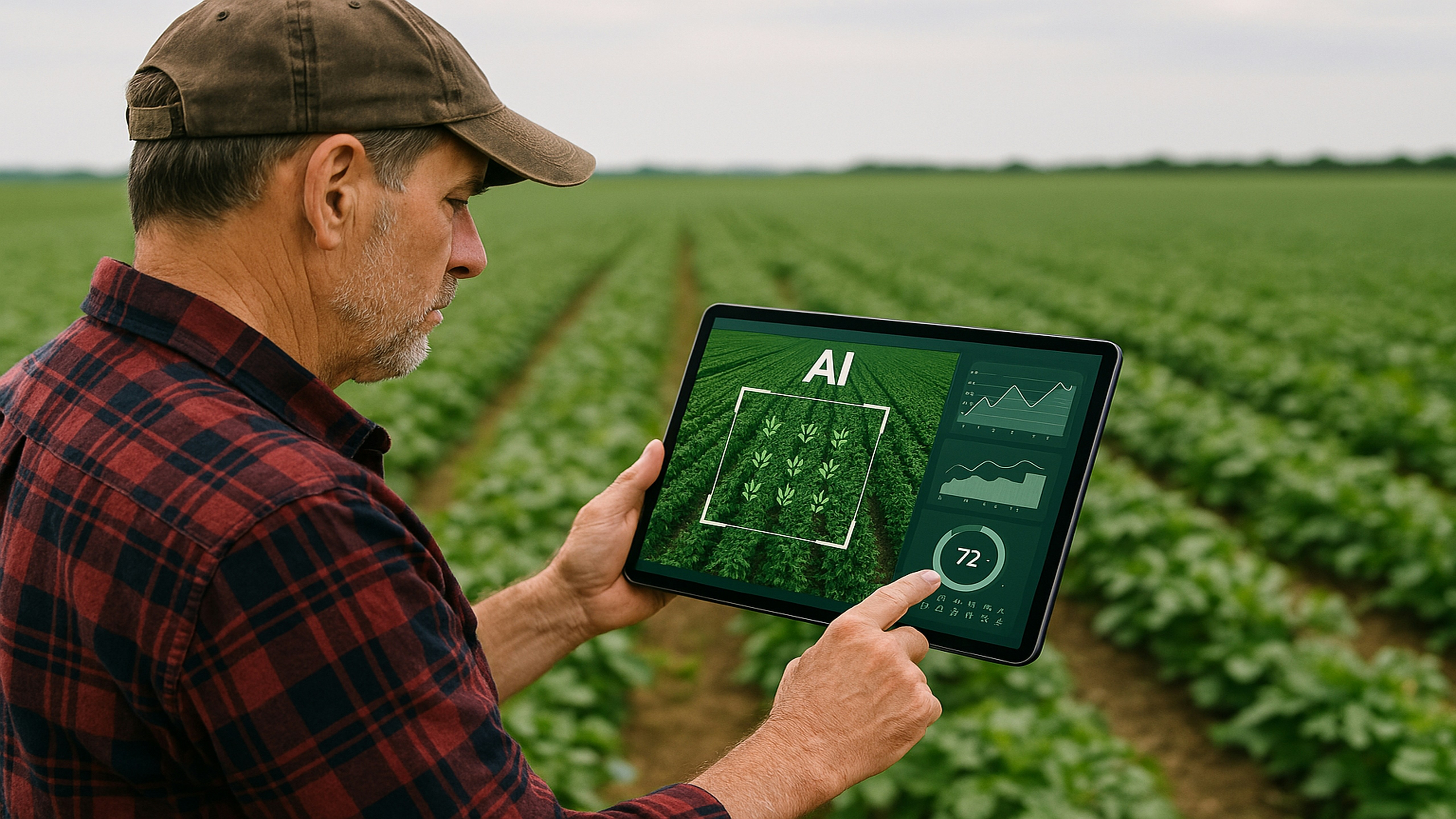
Every raspberry and blackberry grower knows the pressure of trying to keep up with irrigation while everything else on the farm demands attention. When water timing influences fruit size, uniformity, and pack-out, even small setbacks can ripple through a season.
Yet despite the importance of getting irrigation right, many farms still rely on long field walks, manual valve checks, and a lot of hope that each set completed as planned.
Automation could relieve much of that strain, but the systems available in the past were often too costly, too complicated, or too disruptive to justify.
Why irrigation still creates daily pressure
Verdi was built around changing that equation. Guided by the mission to make irrigation automation accessible to every farm by retrofitting onto the systems growers already use and trust, the company has focused on developing a practical, affordable approach that fits real-world farms rather than requiring it to bend around technology.
As Arthur Chen, Verdi’s CEO, explains, “Growers were telling us the same thing everywhere we went. They didn’t need a big, complicated system. They needed something that worked with what they already had, something that saved them time without adding more to their plate. That has shaped every decision we make.”
For caneberry growers, this approach means tools designed specifically for the mixed soil types, stretched crews, varied block performance, and unforgiving timing that define raspberry and blackberry production.
As a NARBA industry member, Verdi is committed to supporting the caneberry community with practical, affordable tools that fit real-world farming conditions.
Small Changes Yield Big Results
Across berry farms that have begun using Verdi, a consistent theme is emerging: small changes in how irrigation is managed can create meaningful results in time savings, crop quality, and day-to-day predictability.
As one berry grower, Enrique Hernandez of Reiter Berry Farms, shared, “Verdi helps us monitor what’s happening with moisture in our pots, which is critical given how sensitive our production system is. We don’t focus on a single number. We use the trends to understand how things are drying down and to stay ahead, especially on hot days when losing even a few irrigations can turn into a bigger problem. That visibility helps us respond sooner and avoid crop loss."
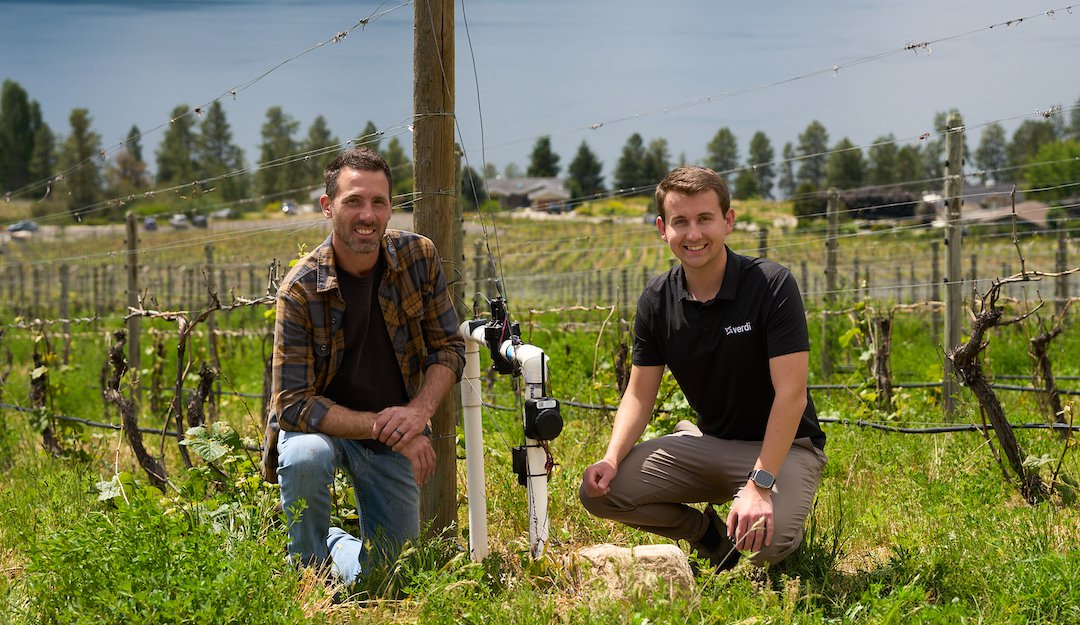
Verdi in the field with customer Matthew Fortuna (left), who reduced daily irrigation management from several hours to about 15-20 minutes.
Why Retrofit Matters for Berry Farms
Instead of requiring trenching, rewiring, or specialized infrastructure, Verdi’s wireless controllers install directly onto the pumps and valves already in use. This lets growers modernize gradually, block by block, without interrupting harvest or reorganizing irrigation layouts. These tools deliver the essential capabilities of traditional automation systems, including remote scheduling, pressure and flow verification, leak detection, and accurate water-use records.
By removing the complexity and high costs that have historically held growers back, farms can achieve comparable results at a fraction of the cost. Many growers are also seeing reductions in both water and labor costs by up to 30%, since fewer field checks, quicker detection of breaks, and more consistent irrigations help prevent waste and unnecessary expense during already tight seasons.
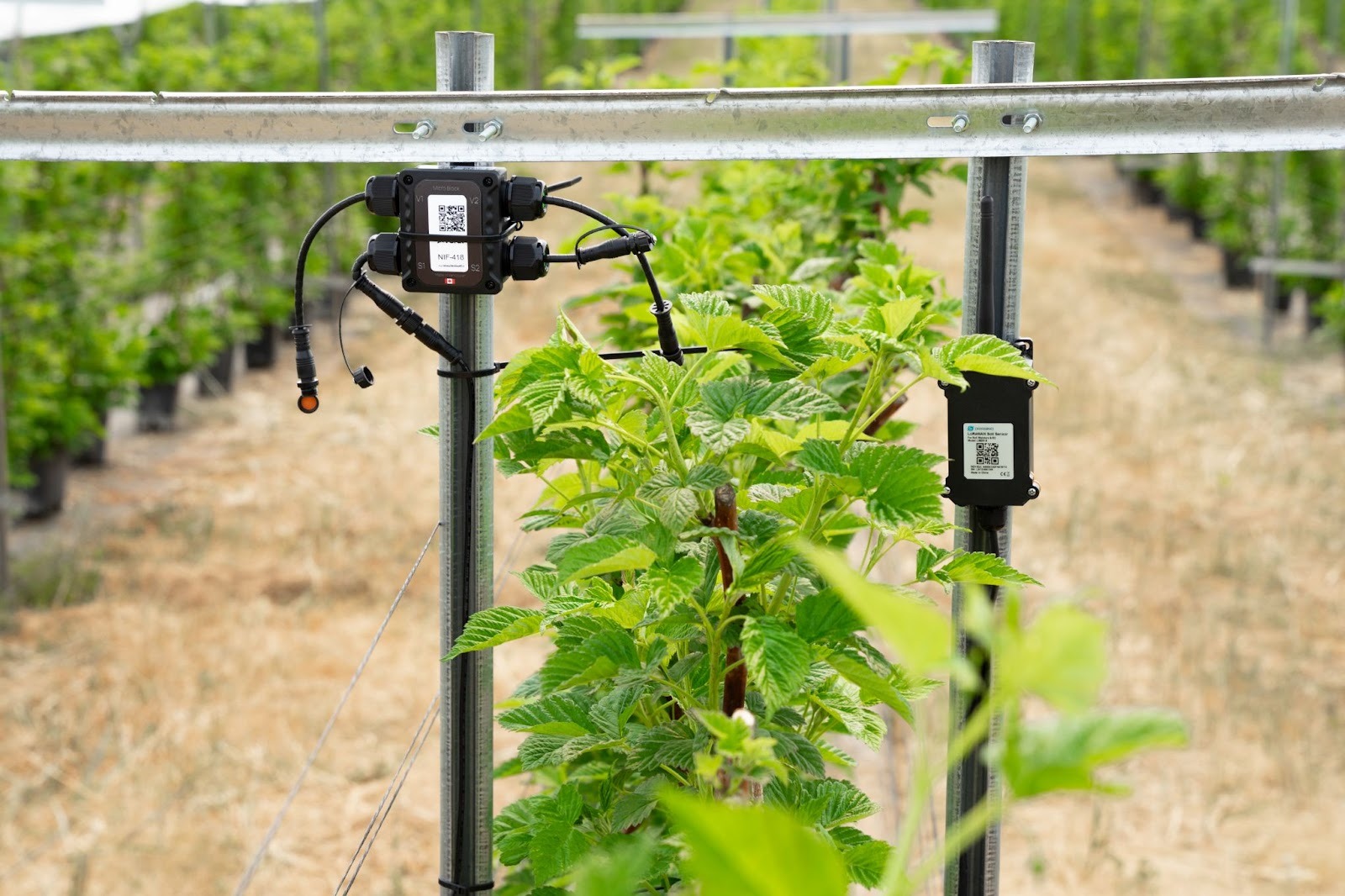
Verdi controller installed directly in a berry field, enabling precise irrigation management at the row level.
What Changes When Irrigation is Verifiable
Growers also point out that raspberries and blackberries are uniquely sensitive to the problems automation helps solve.
Uneven moisture can quickly show up as variation in berry size and firmness. Missed irrigations during heat can result in noticeable crop stress within hours. Once fruit begins sizing rapidly, even small fluctuations in water distribution can affect quality.
Verdi’s real-time verification gives growers immediate confirmation that each irrigation performed as expected, and alerts them the moment a break, leak, or pressure drop occurs. This allows teams to respond quickly and prevent stress before it reaches the crops. This shift from reaction to prevention has helped reduce uncertainty and give growers back hours in their day.
Fine-tuning Irrigation Where it Matters Most
Variability across a field is another challenge familiar to caneberry growers. Many operations manage blocks with different soil textures or canopy densities, or deal with areas of ground that dry out faster than others. Verdi’s row-level visibility and control options help growers fine-tune irrigation where it is needed most. This precision helps growers decide exactly when to start and stop irrigation, reducing nutrient loss from overwatering and minimizing disease pressure, which in turn supports improved yield and crop quality.
Turning Data Into Decision-Making
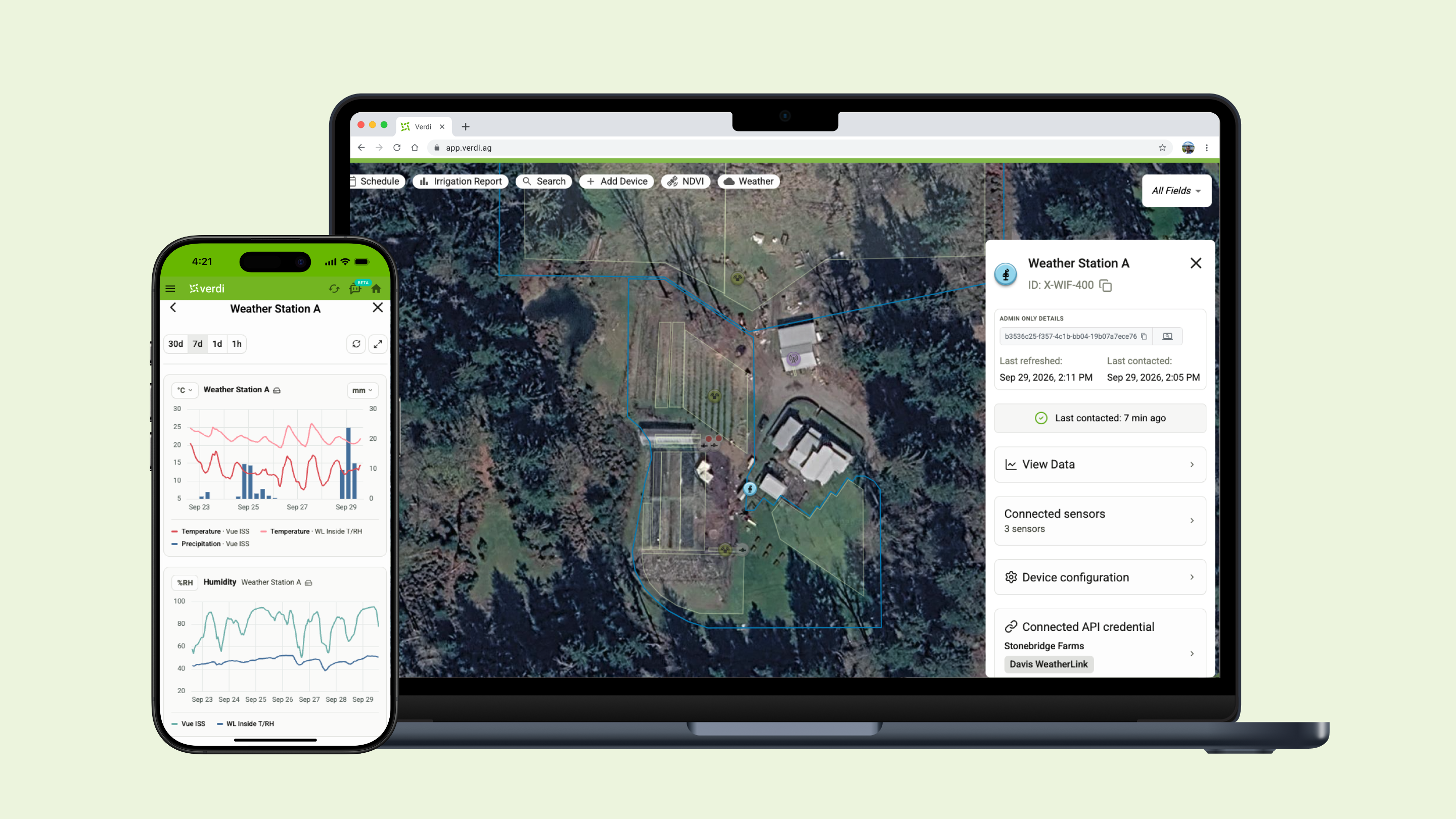
The system can also integrate with existing soil moisture probes, bringing third-party sensors and localized weather data into a single dashboard where irrigators can view soil and weather information, adjust schedules, and evaluate water use throughout the season. For farms operating multiple properties or training seasonal crews, consolidating this information into a single, easy-to-use platform has proven especially valuable.
Caneberry growers understand better than anyone how critical consistent irrigation is to a successful season. By helping make irrigation reliable, verifiable, and far less labor-intensive, Verdi is giving growers back hours in their day while reducing the stress of uncertainty. That support helps growers redirect their energy to what matters most: their crops, their teams, and the seasons ahead.
_16_9.png)